Purchasing an industrial popcorn production line is a major decision for snack manufacturers. The right equipment can help increase production capacity, improve workflow, and reduce unnecessary manual handling. However, choosing a line based only on its advertised output or purchase price can lead to unexpected costs and production bottlenecks.
Before purchasing an industrial popcorn production line, buyers should verify the actual finished-product capacity, included equipment, popping technology, coating requirements, packaging speed, installation conditions, cleaning procedures, and after-sales support. These factors determine whether the proposed system can meet the factory's daily production targets and operate reliably under real manufacturing conditions.
XFD Popcorn provides industrial popcorn machines and production-line solutions for manufacturers with different output requirements. This guide explains what buyers should check before requesting a quotation or confirming an equipment order.
A well-planned industrial popcorn production system should match the factory's output target, product range, and processing requirements.
Verify the Actual Production Capacity Before Ordering
Production capacity should be one of the first things buyers verify when comparing industrial popcorn production lines. However, the capacity stated in a quotation needs to be clearly defined.
Some specifications refer to raw kernel input, while others refer to popped popcorn or finished flavored popcorn. These figures are not interchangeable. A line that processes a certain quantity of kernels per hour may deliver a different quantity of finished product after popping losses, coating, screening, and other processing steps.
Before purchasing, ask the supplier to confirm the following:
- Rated production capacity in kilograms per hour.
- Whether the figure refers to raw kernels, popped popcorn, or finished product.
- The product type and recipe used for the capacity estimate.
- Expected output during normal operation, including routine production interruptions.
- Whether the stated capacity applies to the popping machine or the complete production line.
For example, a factory targeting 120 kg of finished popcorn per hour needs to verify that the popping, cooling, coating, and packaging stages can support that target. Purchasing a popper rated at 120 kg/h does not automatically mean the complete line will deliver 120 kg/h of packaged product.
XFD offers different industrial equipment configurations for different production requirements. Buyers can review the available industrial popcorn machines and ask for a capacity recommendation based on their target output and product specifications.
Check Which Machines and Components Are Included
An industrial popcorn production line is usually more than a single popping machine. Depending on the product and automation level, the complete system may include ingredient feeding, oil supply, popping equipment, conveying, cooling, filtering, coating, and packaging.
Buyers should request a detailed equipment list rather than relying on the general description of an automatic production line.
A typical configuration may include the following components:
| Equipment | What Buyers Should Verify |
|---|---|
| Popping machine | Heating method, batch size, cycle time, and rated capacity. |
| Ingredient and oil feeding system | Feeding accuracy, supply method, and compatibility with the selected machine. |
| Conveying system | Transfer capacity, layout, elevation, and cleaning access. |
| Cooling and filtering equipment | Processing capacity, cooling requirements, and separation performance. |
| Coating or seasoning machine | Compatibility with caramel, dry powders, or other intended flavoring ingredients. |
| Packaging equipment | Bag format, filling accuracy, sealing method, and packing speed. |
| Control system | Operating controls, alarms, automation functions, and operator requirements. |
Not every factory needs every component, and some equipment may be combined into a single machine. The important point is to understand exactly what is included in the quotation and what must be purchased separately.
For manufacturers evaluating a complete system, XFD's industrial popcorn production line solutions provide a starting point for discussing the equipment configuration required for a particular production workflow.
Compare Popping Technologies and Production Methods
Different popcorn production systems use different heating technologies and operating methods. Buyers should choose a configuration that suits the required output, product characteristics, operating conditions, and available budget.
Electromagnetic heating systems may be suitable for manufacturers seeking a controlled popping process and an industrial configuration that can be expanded through multiple machines. Hot-air systems may be appropriate for production setups designed around hot-air popping and compatible downstream processing.
These technologies should not be compared by heating method alone. Buyers also need to consider popping performance, cycle time, energy consumption, maintenance requirements, and compatibility with the intended recipe.
It is equally important to distinguish batch popping from continuous processing. Some automated industrial production lines use batch-based popping equipment while integrating conveying, cooling, coating, and packaging into a coordinated workflow.
An automated production line does not necessarily use continuous popping. Ask the supplier to explain how materials move through the system, which stages operate in batches, and where manual intervention is required.
Before making a decision, request the technical specifications for the proposed model and clarify how the equipment will perform under your intended production conditions.
Confirm That the Line Can Produce Your Intended Popcorn Flavors
A production line designed for plain popcorn may not automatically be suitable for every coated or flavored product. Caramel popcorn, chocolate popcorn, cheese popcorn, and other flavored varieties can require different processing arrangements.
For example, caramel popcorn production may involve heating and mixing coating ingredients, distributing the coating over the popped kernels, and cooling the finished product before packaging. Dry-seasoned popcorn may require a different coating method.
Before purchasing, buyers should provide the supplier with information about:
- The popcorn varieties and flavors to be produced.
- Whether the coating uses liquid ingredients, cooked caramel, dry powders, or other materials.
- The required coating uniformity and finished-product characteristics.
- The expected frequency of recipe changes.
- The cleaning procedures needed when switching between products.
Do not assume that every coating machine can handle every recipe. A machine designed for dry seasoning may not be suitable for cooking sticky caramel, and the required heating and mixing functions can differ substantially.
Manufacturers producing several flavors should also ask how the equipment handles changeovers. Cleaning time and recipe adjustments can affect actual daily production even when the rated machine capacity is high.
Buyers can explore XFD's popcorn equipment range to compare available machine types and identify suitable equipment for their planned product range.
Make Sure Cooling, Coating, and Packaging Can Keep Up
One of the most common purchasing mistakes is selecting a high-capacity popping machine without checking the capacity of the downstream equipment.
If the popping stage produces popcorn faster than the cooling, coating, or packaging equipment can process it, product may accumulate between stages. Operators may need to slow production or stop the upstream machines, reducing the effective output of the complete line.
For this reason, buyers should evaluate the production line as one connected system.
Check whether:
- The conveying system can handle the expected popcorn flow.
- The cooling equipment is suitable for the product and required throughput.
- The coating machine can process the intended volume without creating a bottleneck.
- The packaging equipment can handle the required product weight and bag format.
- The system allows operators to identify and manage interruptions between stages.
Packaging speed deserves particular attention. A line producing a large volume of popcorn per hour may still fail to meet its finished-product target if the packing machine cannot fill and seal enough bags within the same period.
When requesting a quotation, ask the supplier to confirm the expected output of the complete line, including the relevant cooling, coating, and packaging equipment.

Coordinating popping, cooling, coating, and packaging helps manufacturers evaluate the capacity of the complete production system.
Calculate the Total Cost of Ownership
The purchase price is important, but it does not represent the full cost of operating an industrial popcorn production line.
A lower-priced system may require more manual labor or additional equipment. A more automated configuration may require a larger initial investment but reduce some repetitive handling tasks. The financial result depends on production volume, operating hours, energy use, maintenance, and actual utilization.
Before comparing quotations, consider the following costs:
- Equipment purchase price and installation expenses.
- Electrical consumption and other utility requirements.
- Labor required for normal operation and product changeovers.
- Cleaning materials, maintenance, and spare parts.
- Raw material losses and finished-product yield.
- Packaging materials and other consumables.
- Downtime, repairs, and production interruptions.
A useful comparison is the estimated operating cost per kilogram of finished popcorn rather than the equipment purchase price alone.
For example, if two production lines have different purchase prices, compare their expected output, operating expenses, staffing needs, and utilization over the same period. Use the same assumptions for both systems so the comparison is meaningful.
Buyers should also ask which items are included in the quoted price. Installation, shipping, commissioning, training, and spare parts may be treated differently by different suppliers.
Verify Installation Space, Utilities, and Factory Layout
An industrial popcorn production line must fit the available factory space and work with the site's electrical supply and other utility requirements.
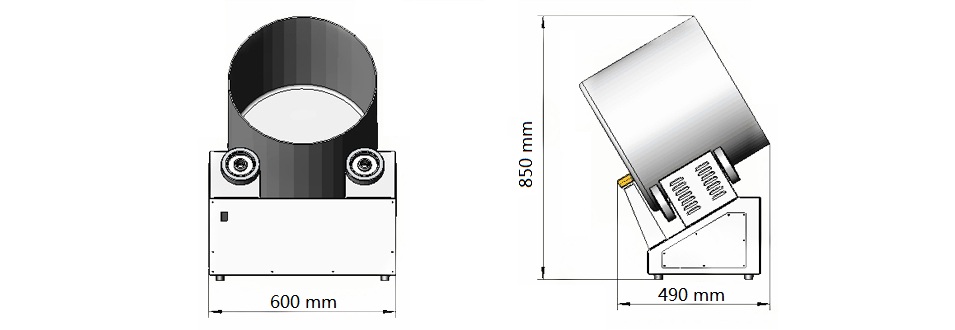
Before ordering, request the machine dimensions, layout drawings, total power requirements, and any relevant installation specifications. If the line includes several machines, make sure there is sufficient space for conveying equipment, operator access, cleaning, and maintenance.
Buyers should verify the following details with the supplier:
- Overall equipment dimensions and the proposed production-line layout.
- Required voltage, frequency, phase, and installed electrical power.
- Any required ventilation, extraction, or other site utilities.
- Space for raw material storage and finished-product handling.
- Access for cleaning, inspection, and replacement of components.
- The arrangements needed for equipment delivery and installation.
These checks are especially important when upgrading an existing factory. A production line that fits on paper may still be difficult to operate if the layout leaves insufficient space for maintenance or material movement.
Ask the supplier to review the actual factory conditions before finalizing the configuration whenever possible.
Check Food-Contact Materials and Cleaning Requirements
Food-contact materials, cleaning access, and maintenance procedures should be verified before purchasing equipment for food manufacturing.
Buyers should request the material specifications for the components that come into contact with popcorn, oil, sugar, caramel, and other ingredients. If particular food-contact standards or documentation are required in the destination market, these requirements should be discussed before the order is confirmed.
Do not rely on a general statement that a machine is suitable for food production. Confirm which materials are used in the actual configuration and request the relevant documentation.
Cleaning requirements are equally important. Coating ingredients can leave residues on equipment, especially when recipes contain sugar or other sticky components. Equipment should provide suitable access for cleaning and inspection, with procedures appropriate for the intended ingredients and production process.
Before purchasing, ask:
- Which components are made from food-contact materials?
- What cleaning methods are recommended for the selected machine?
- How long does routine cleaning or a typical flavor changeover take?
- Which parts require regular inspection or replacement?
- What documentation is available for the selected configuration?
Clear answers help manufacturers plan routine maintenance and establish appropriate operating procedures before the equipment enters production.
Review Automation, Operator Training, and Safety Features
Automation can reduce repetitive manual work and help coordinate different production stages. However, buyers should understand exactly which functions are automated instead of assuming that a line described as fully automatic requires no operator involvement.
Ask the supplier to explain how ingredients are supplied, how the popping cycle is controlled, how popcorn moves between machines, and how the system responds when a stage stops or an alarm occurs.
Before placing an order, verify:
- Which processes operate automatically and which require manual input.
- How operators monitor temperature, production status, and alarms.
- What safety guards, emergency stops, and other protective features are provided.
- Whether operating instructions and training are available.
- What routine inspection and maintenance tasks operators must perform.
Operator training is important even when a large part of the process is automated. Employees need to understand normal operation, cleaning, basic troubleshooting, and the correct response to equipment faults.
For international buyers, it is also useful to confirm the available documentation language and the process for obtaining technical assistance after installation.
Confirm Warranty, Spare Parts, and After-Sales Support
Industrial production equipment is a long-term investment. Buyers should understand how the supplier will support the machine after delivery and commissioning.
Before purchasing, request written information about warranty coverage, exclusions, spare parts availability, technical support, and the procedure for reporting equipment problems.
Important questions include:
- What is the warranty period, and which components are covered?
- Which consumable parts and spare parts should the factory keep in stock?
- How can overseas customers contact technical support?
- Are troubleshooting instructions, operating manuals, and maintenance schedules provided?
- What support is available during installation and commissioning?
Buyers should also clarify who is responsible for shipping replacement parts, what information is required to diagnose a fault, and whether remote assistance is available.
These details are especially important for factories that depend on stable production schedules and cannot easily replace a machine if an unexpected problem occurs.
To learn more about XFD's manufacturing background and industrial popcorn equipment capabilities, visit the XFD Popcorn manufacturer profile and discuss the support arrangements applicable to the proposed equipment.
Ask for a Clear Quotation and Equipment Specification
Once the production requirements are defined, buyers should request a detailed quotation that allows them to compare suppliers on the same basis.
A useful quotation should identify the proposed machine models, included components, technical specifications, rated capacity, power requirements, and applicable commercial terms.
Before approving the order, confirm that the quotation clearly states:
- The complete equipment list and machine configuration.
- The rated capacity and the basis used to calculate it.
- The intended popcorn varieties and processing requirements.
- The electrical specifications and installation requirements.
- The included accessories, control systems, and auxiliary equipment.
- The price, payment terms, lead time, and delivery arrangements.
- The warranty, training, documentation, and after-sales support arrangements.
If the factory has a specific output target, ask whether the supplier can explain how the proposed configuration is expected to meet it. Where appropriate, discuss production testing and acceptance criteria before placing the order.
A detailed quotation reduces misunderstandings and makes it easier to determine whether two suppliers are offering genuinely comparable systems.
A Practical Checklist Before Buying an Industrial Popcorn Production Line
Before confirming an order, use this checklist to review the most important purchasing decisions.
| Verification Item | What Should Be Confirmed? |
|---|---|
| Production capacity | Actual finished-product output and the conditions used for the estimate. |
| Equipment configuration | All included machines, accessories, and auxiliary systems. |
| Product compatibility | Suitability for the intended popcorn flavors and coating recipes. |
| Line balance | Compatible capacities for popping, cooling, coating, and packaging. |
| Operating costs | Energy, labor, maintenance, cleaning, and consumables. |
| Installation | Factory layout, electrical supply, utilities, and maintenance access. |
| Cleaning and materials | Food-contact specifications, cleaning procedures, and relevant documentation. |
| Support | Warranty, spare parts, training, manuals, and technical assistance. |
| Commercial terms | Price, delivery, payment, commissioning, and agreed acceptance criteria. |
If several items remain unclear, resolve them before confirming the purchase. A few additional questions during the quotation stage can prevent expensive changes after the equipment has been delivered.
How Should Buyers Choose the Right Industrial Popcorn Production Line?
The best industrial popcorn production line is not necessarily the largest or most automated option. It is the system that meets the factory's actual production requirements while keeping operating costs, product quality, and maintenance needs manageable.
For smaller operations or manufacturers producing multiple flavors in limited quantities, a flexible configuration may be more practical. For factories with stable demand and higher output targets, an integrated production line may offer better coordination between popping, cooling, coating, and packaging.
Before requesting a quotation from XFD Popcorn, prepare the following information:
- Required finished-product output in kilograms per hour.
- Popcorn varieties and coating recipes.
- Preferred heating method and automation level, if already determined.
- Packaging formats and expected packing speed.
- Available factory space and electrical supply.
- Expected production hours and future expansion plans.
These details help the supplier evaluate the appropriate equipment configuration rather than recommending a machine based on output alone.
XFD offers popcorn equipment for different commercial and industrial applications. By confirming the capacity, configuration, product compatibility, installation requirements, and after-sales arrangements before ordering, manufacturers can make a more informed purchasing decision and plan a production system that supports long-term business growth.
Frequently Asked Questions
What should buyers verify before purchasing an industrial popcorn production line?
Buyers should verify finished-product capacity, included equipment, popping technology, coating compatibility, packaging speed, power requirements, installation conditions, cleaning procedures, warranty coverage, spare parts, and after-sales support. These factors determine whether the proposed system matches the factory's actual production needs.
How do I know whether an industrial popcorn production line has enough capacity?
Start with the required finished-product output in kilograms per hour. Ask the supplier to clarify whether the rated capacity refers to raw kernels, popped popcorn, or finished flavored popcorn. Also confirm that cooling, coating, and packaging can handle the same production target.
What equipment should an industrial popcorn production line include?
Depending on the application, a line may include popping machines, ingredient and oil feeding systems, conveyors, cooling and filtering equipment, coating or seasoning machines, packaging equipment, and controls. The exact configuration depends on the product, output target, and required automation level.
Can one industrial popcorn production line make different flavors?
Some production lines can handle multiple popcorn flavors, but suitability depends on the popping, coating, and mixing equipment. Buyers should confirm compatibility with each recipe and check the cleaning and changeover procedures needed between products.
Why is packaging capacity important when purchasing a popcorn production line?
Packaging can become a bottleneck if the packing equipment cannot handle the output from the popping and coating stages. Buyers should confirm the required bag format, filling accuracy, sealing method, and packing speed to ensure the complete line can meet its production target.
What should buyers check about installation requirements?
Confirm the equipment dimensions, factory layout, electrical supply, total power requirements, utility needs, maintenance access, and delivery arrangements. Reviewing these details before ordering helps prevent installation delays and unexpected site modification costs.
How can buyers compare the total cost of industrial popcorn equipment?
Compare the purchase price together with installation, energy consumption, labor, cleaning, maintenance, spare parts, consumables, and expected downtime. Using the estimated operating cost per kilogram of finished popcorn can provide a more useful comparison than equipment price alone.
What after-sales support should an industrial popcorn machine supplier provide?
Buyers should clarify warranty coverage, spare parts availability, operating manuals, maintenance instructions, operator training, and technical assistance. For international purchases, confirm how support requests are handled and how replacement parts can be obtained.
Should buyers request a production test before purchasing?
Where appropriate, buyers should discuss a production test or agreed acceptance criteria with the supplier before placing the order. The test conditions should identify the intended product, output measurement method, and relevant quality requirements so that performance can be evaluated fairly.
How can I request the right industrial popcorn production line from XFD?
Prepare your target output in kilograms per hour, popcorn varieties, coating recipes, packaging requirements, factory power supply, available space, and automation preferences. Providing this information helps XFD evaluate a suitable equipment configuration for your manufacturing needs.